
How Light (Photon) Fool us ?????
I hope you have read my previous article:
Topic :"How light fool us"
Its atually we ourself fooling us , how?? Lets talk :
Let me ask a question from you ?
How much time does light take to travel from sun to earth ?
If your answer is : 8 min apx then you are wrong , why ?
The photon that you are seing today or form which you are producing solar power might have been taken birth during the Ice Age or even earlier !!!
Yuuup you heard right !
Photon don't take 8 min and 25 sec , its just the time it had taken from suns outer surface to earth , the actual photon had taken birth way before.
The photons
Photons are the smallest possible particles of electromagnetic energy and therefore also the smallest possible particles of light. Photons can travel at the speed of light because they have no mass . Photons also have no charge. Photons represent the entire spectrum of electromagnetic radiation.
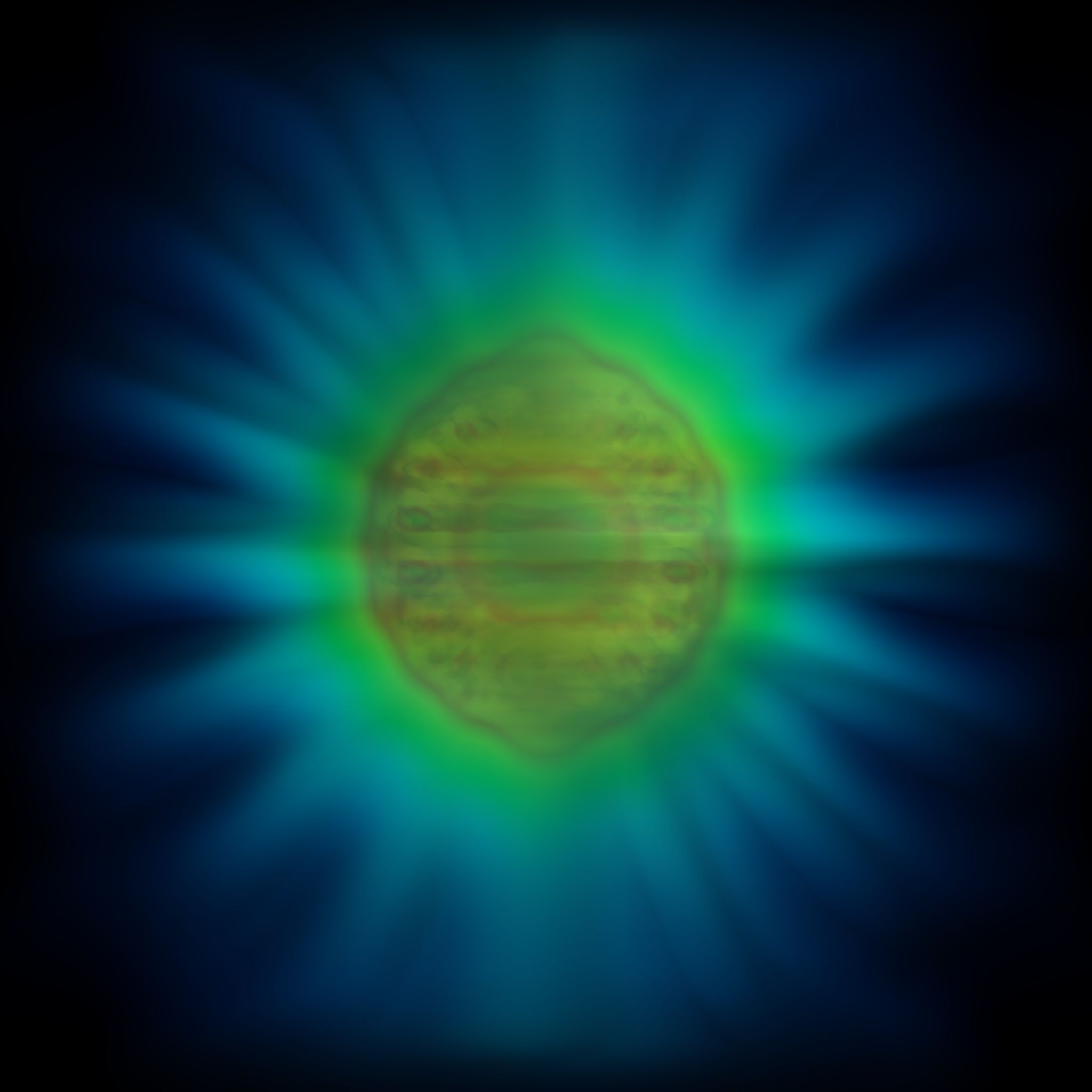
This mind-bending delay happens because of the Sun's dense interior???????????
To understand this, we need to dive into the Sun's structure.:
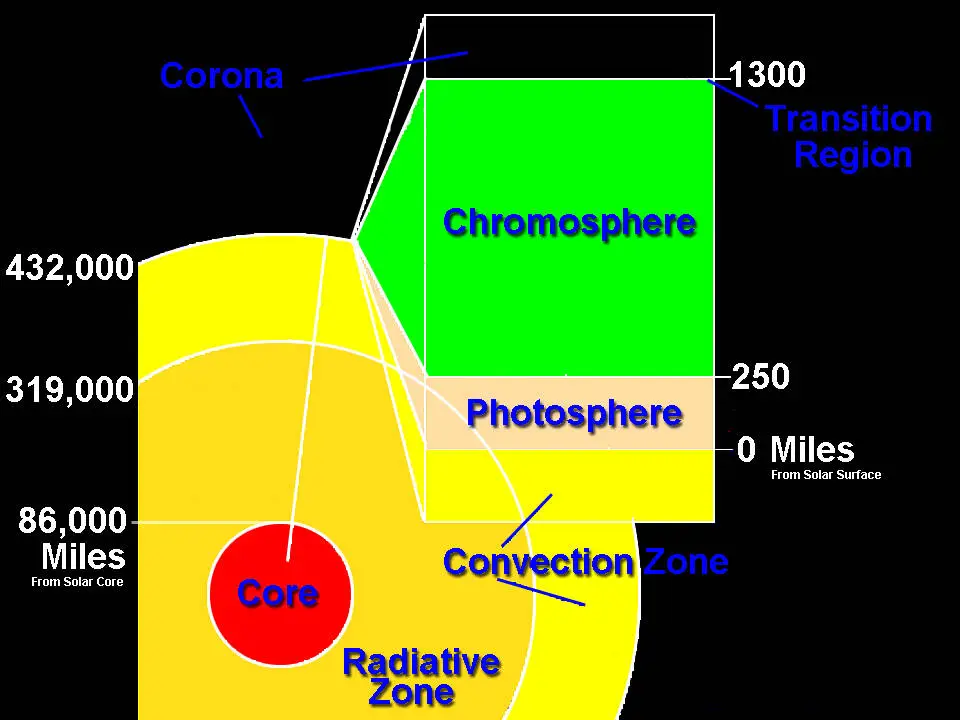
The Sun isn't a solid ball but a layered sphere of superheated plasma (ionized gas). It's divided into interior regions where energy is generated and transported, and an outer atmosphere where that energy finally escapes as visible light. Here's a breakdown of the key layers :
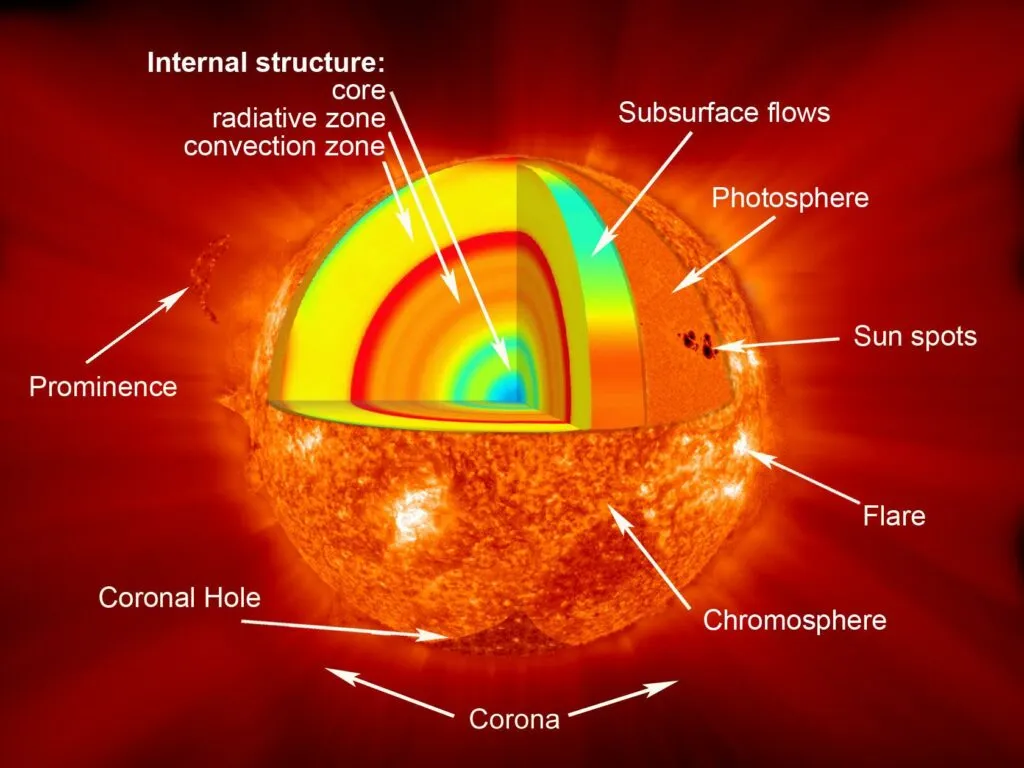
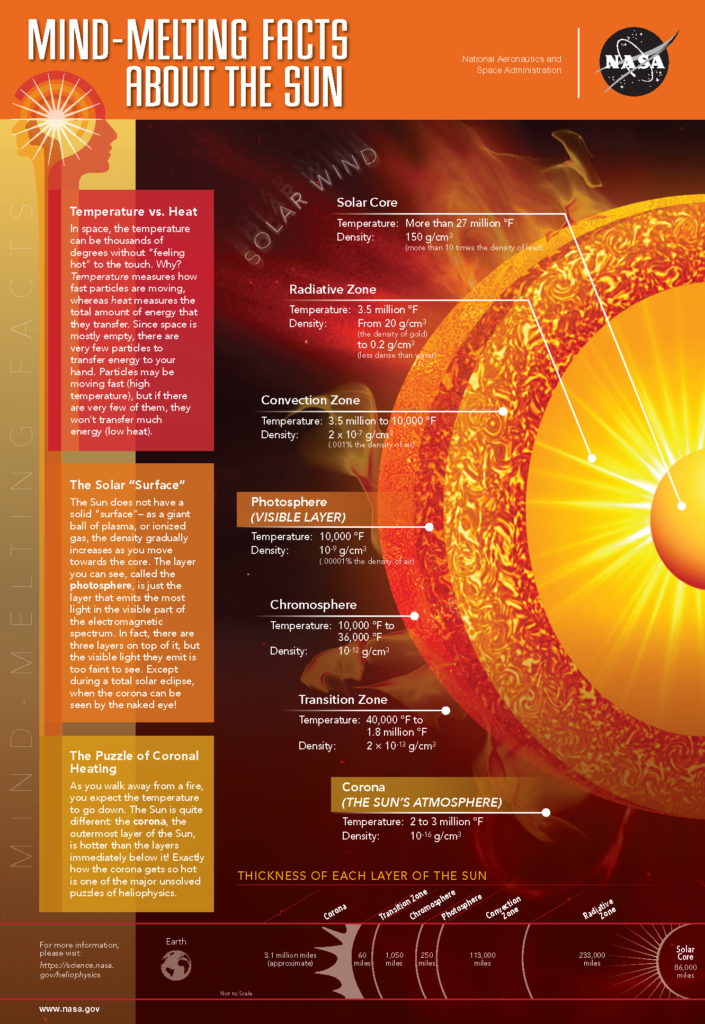
Layer | Description | Radius (Approx) | Temperature (Approx) | Role in Energy Transport |
Core | The Sun's powerhouse, where nuclear fusion smashes hydrogen atoms into helium, releasing energy in the form of gamma-ray photons and neutrinos. This is the densest and hottest part. | 0–25% of Sun's radius (up to 175,000 km from center) | 15 million °C at center, dropping to 7 million °C at edge | Energy generation via fusion; photons are created here almost instantly, but they immediately begin interacting with matter. |
Radiative Zone | A thick shell surrounding the core, packed with dense plasma. Energy moves outward primarily through radiation—photons bouncing off particles in a "random walk." | 25–70% of Sun's radius (~175,000–486,000 km from center) | 7 million °C at base to ~2 million °C at top | Slow photon diffusion: this is where most of the delay happens due to constant absorption and re-emission. |
Tachocline (Interface Layer) | A thin transition zone between the radiative and convective zones, where rotation rates change and the Sun's magnetic field is thought to originate. | 70% of Sun's radius (486,000 km from center) | ~2 million °C | Acts as a boundary; minimal direct impact on photon travel time, but helps generate magnetic dynamo effects. |
Convective Zone | The outer interior layer, where hot plasma rises like boiling water in a pot, carrying energy upward through convection currents. Cooler plasma sinks back down. | 70–100% of Sun's radius (~486,000–696,000 km from center) | 2 million °C at base to 5,700 °C at top | Convective transport: energy moves faster here via bulk motion of material rather than pure radiation. |
Photosphere | The "surface" we see—a thin layer of the atmosphere where the Sun becomes opaque to light. This is where visible sunlight is emitted. | Just above the convective zone (696,000 km from center, ~500 km thick) | 5,700 °C | Emission of visible light; photons escape freely from here into space. |
Chromosphere | A ragged, reddish layer above the photosphere, visible during solar eclipses. It's hotter and less dense, with spiky structures called spicules. | Extends ~2,000–3,000 km above photosphere | 6,000–20,000 °C | Transitional atmosphere; light passes through quickly, but it's where some ultraviolet radiation originates. |
Corona | The outermost atmosphere, a vast, wispy halo extending millions of kilometers into space. It's paradoxically hotter than the surface due to magnetic heating. | Extends outward from chromosphere (millions of km) | 1–3 million °C | Final escape route; photons stream through this sparse region unimpeded, powering the solar wind. |
All the above data is taken from sourced websites , refrence is given below:
Now, let's follow a single photon's journey
Birth in the Core
Under crushing pressure and heat, four hydrogen protons fuse into one helium nucleus . This releases a burst of energy, including high-energy gamma-ray photons.
The creation of a photon happens in a fraction of a second?
The photon barely travels a mm before slamming into a proton or electron. It's absorbed, heating the particle, which then re-emits a new photon in a random direction. This isn't a straight path; it's a zigzag . Time spent in the core itself is short—perhaps just years or decades .
The Radiative Zone:
Spanning most of the Sun's interior, the radiative zone is still incredibly dense ,Photons continue their random walk, bouncing billions of times. Each step is tiny—mean free paths as short as 0.1 mm in the densest parts—making progress glacial.Scientific estimates for the time to traverse the radiative zone vary due to assumptions about density, temperature, and photon paths. A common calculation yields about 170,000 years, but ranges span 10,000 to 1 million years.
The Convective Zone:
A Faster Ride on Plasma Currents Emerging into the convective zone via the tachocline (which adds negligible time). Density drops, and energy transport switches to convection: hot plasma bubbles up in granules cools at the top, and sinks. Photons hitch a ride on these currents, but the process is more about bulk heat transfer than individual photon bouncing.This stage is much quicker—estimates suggest weeks to months for energy to cross the zone,
Compared to the radiative zone,
The convective zone's "boiling" action propels energy outward efficiently. Here, photons continue degrading to visible light wavelengths.Escape from the Surface: The Photosphere and Beyond At last, the photon reaches the photosphere, the Sun's visible "surface." This layer is thin and cooler, allowing photons to stream out freely—no more dense obstacles.
Through the photosphere?
From there, it zips through the chromosphere (adding perhaps a minute or less, given its thinness) and the vast, sparse corona Finally free, the photon hurtles into space at 300,000 km/s .
Quick Facts
Length of day: 25 Earth days at the equator and 36 Earth days at the poles.
Length of year: The Sun doesn't have a "year," per se. But the Sun orbits the center of the Milky Way about every 230 million Earth years, bringing the planets, asteroids, comets, and other objects with it.
Star type: G2 V, yellow dwarf main-sequence star
Surface temperature: (Photosphere) 10,000 degrees Fahrenheit (5,500 degrees Celsius)
Corona (solar atmosphere) temperature: Up to 3.5 million °F (2 million °C)
Eight Minutes to Earth :
From the Sun's surface to Earth, it's a straight in the vacuum of space.
Just 8 minutes and 20 seconds on average.
But , this photon might have been formed during the Ice Age or even earlier human history !!!!!
Details
Auto Post Number
POST-2026-000009
| Post Metadata | |
| Post Type | ORIGINAL |
| Category | DISCUSSION |
| Data Quality | HIGH |
| Completeness | 100% |