
H3 F8 Investigation: Premature Payload Detachment & JAXA's Transparency
short post
111
The Japanese Aerospace Exploration Agency (JAXA) has released a significant update regarding the failure of the H3 Launch Vehicle Flight 8 (H3 F8) carrying the QZS-5 satellite. Contrary to initial hypotheses suggesting a Second Stage Engine (LE-5B-3) reignition failure, the Root Cause Analysis (RCA) presented on January 20, 2026, identifies a catastrophic structural failure of the Payload Attach Fitting (PAF) occurring much earlier in the flight timeline.
The Technical Failure Sequence
Based on the telemetry and optical data released in the report, the failure mode followed this sequence:
- Fairing Separation Event: Upon fairing deployment, accelerometers on the satellite interface recorded an abnormal shock response spectrum and sustained high-amplitude vibration, significantly deviating from nominal baseline data (F5 flight).
- Structural Compromise: This shock event likely caused the structural failure of the Payload Support Structure (PSS). Optical data confirms the immediate stripping of Multi-Layer Insulation (MLI) and visible debris generation within milliseconds of fairing separation.
- Secondary System Damage: The structural deformation severed the pneumatic lines responsible for the 2nd Stage LH2 tank pressurization, corroborated by a concurrent drop in tank pressure telemetry.
- Premature Separation at MECO: At Main Engine Cutoff (MECO), the deceleration of the first stage exerted inertial forces on the payload. Since the structural adapter was compromised, the QZS-5 satellite physically detached from the second stage at this moment.
- Orbital Insertion of Empty Stage: The second stage engine (SEIG1) ignited and performed its burn nominal to the parking orbit. However, verification images at the end of the mission sequence confirmed the payload adapter was empty.
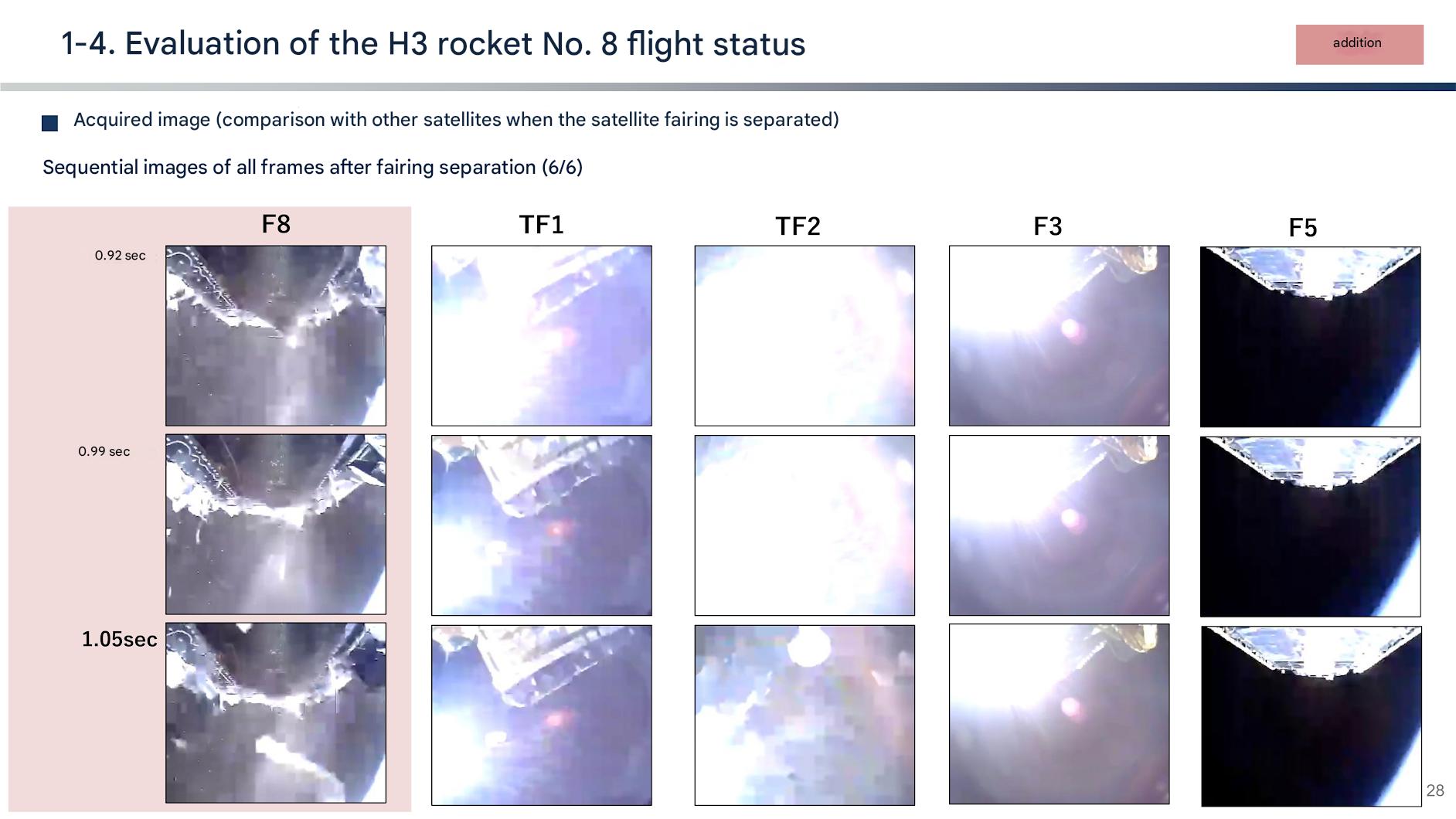
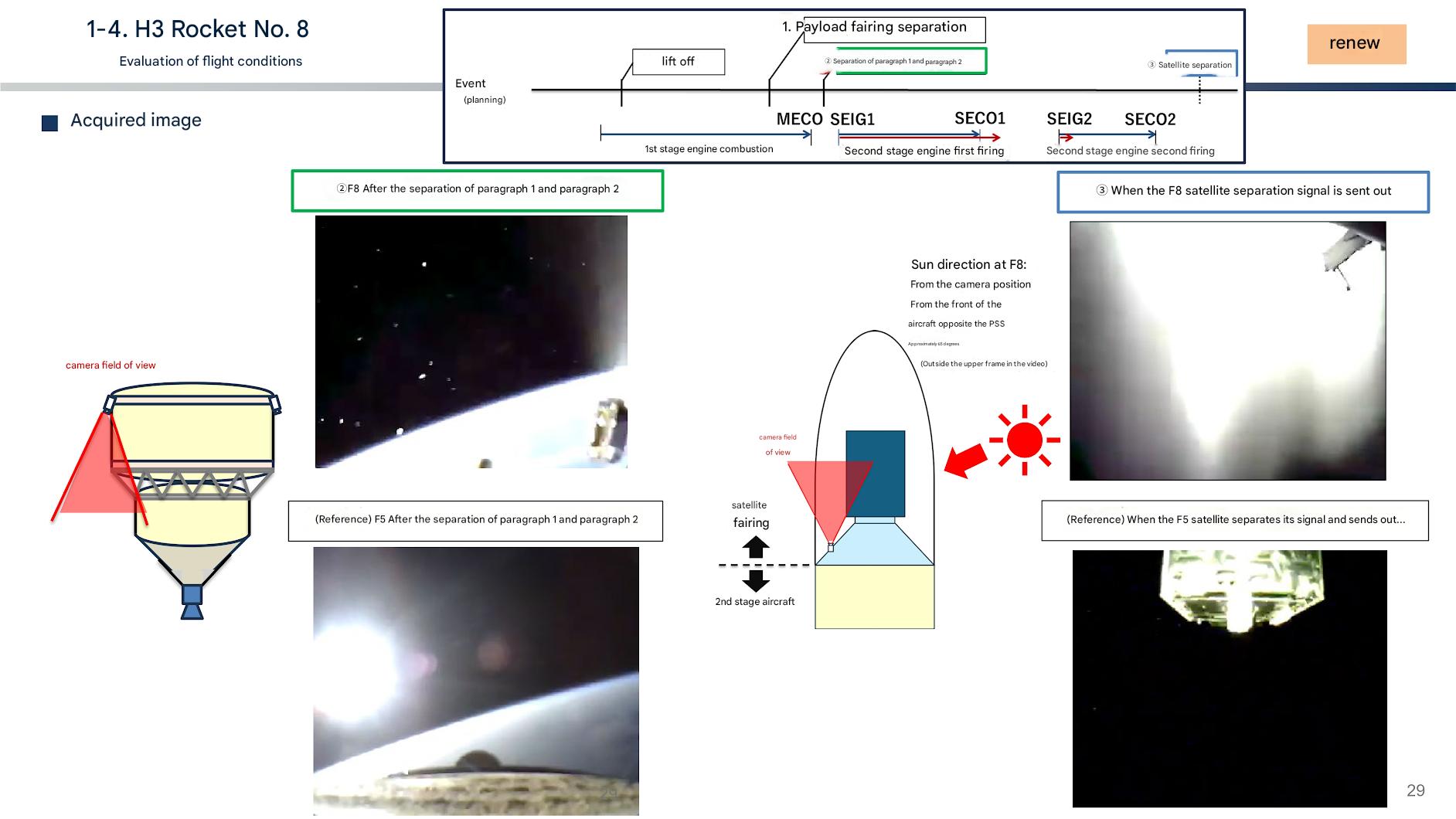
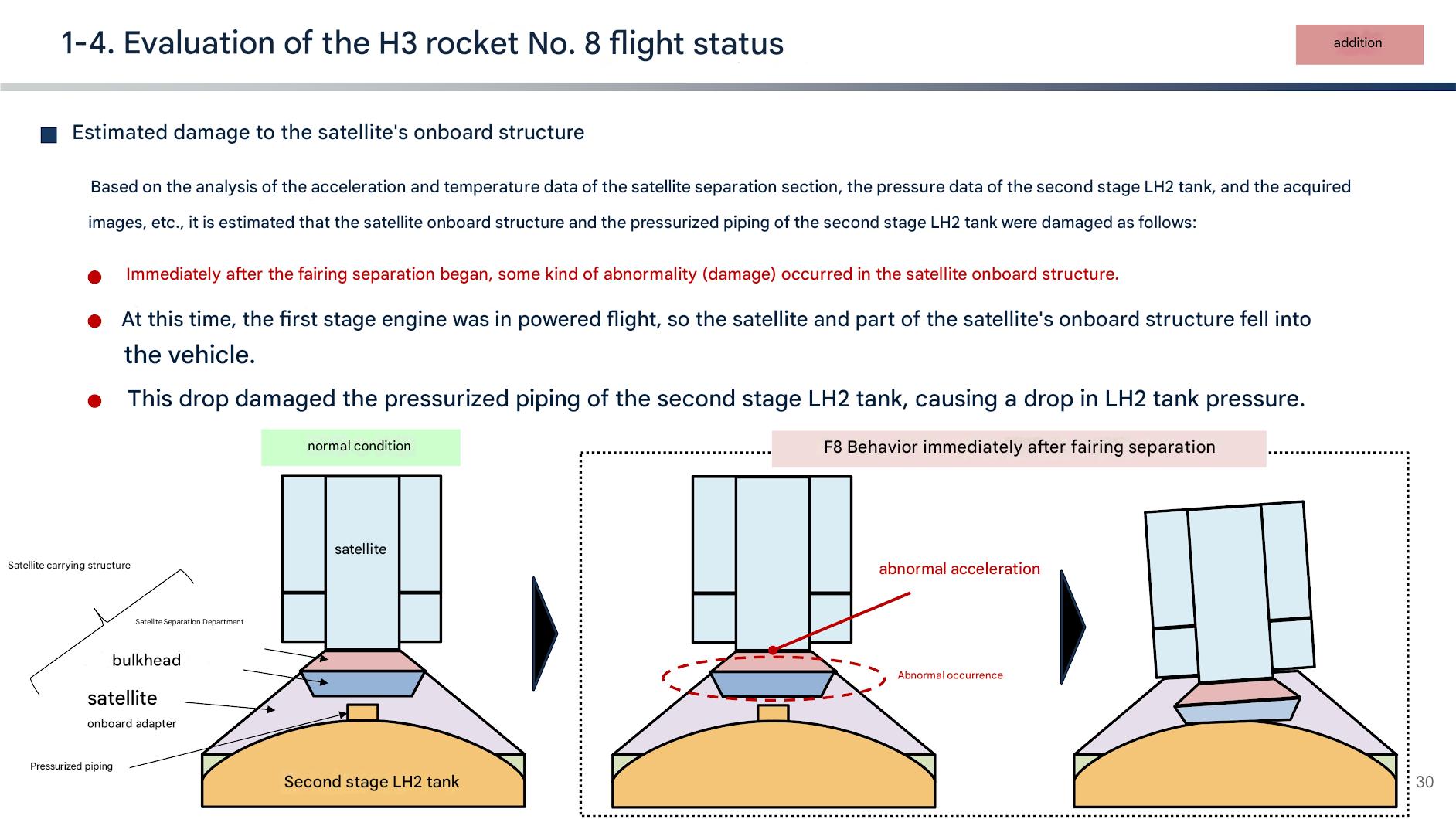
A Lesson in Transparency (and a wish for ISRO) This report is a masterclass in accountability. JAXA released a 42-page detailed PowerPoint including frame-by-frame photos of their own failure. They admitted their initial theory was wrong and showed the world images of their payload disintegrating. As space enthusiasts, we can only wish ISRO would adopt this culture of openness.