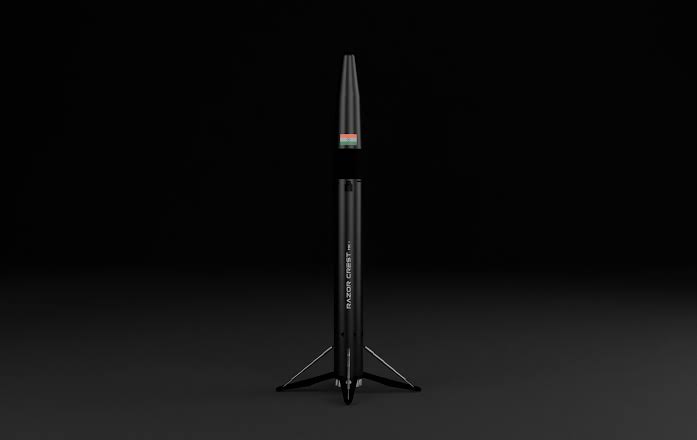
EtherealX and the Reusable Rocket Promise: A Quiet Audit of Schedule, Budget, and Physics
The 100 % Reusable aspiration: A Data-Driven Look at EtherealX’s Claims
Why a start-up’s timeline, budget, and physics must all align and what happens when they don’t
The claim that deserves quiet scrutiny
In August 2024, a two-year-old Indian company called EtherealX announced it would develop “the world’s first fully reusable orbital launch vehicle,” capable of delivering 24.8 tonnes to low Earth orbit in expendable mode or 8 tonnes when fully recovered. The price, they said, would be one-thirty-fifth of the current global average. No orbital-class start-up anywhere has achieved full reusability on its first vehicle. The question is not whether the claim is bold it is whether the supporting evidence exists.
What the public record shows
EtherealX was incorporated in December 2022. It has raised USD 5.1 million in seed funding and, according to its own statements, is targeting a Series A of approximately USD 21 million. LinkedIn data and press releases indicate a team of around sixty people. The company has acquired 16 acres in Tamil Nadu for an engine test facility but has not yet announced a hot-fire test of its main engine.
Upper-stage recovery: the technical benchmark
Reusing an upper stage means decelerating from orbital velocity nearly 7.8 km/s to a precise landing while managing stagnation temperatures above 2,000 °C. SpaceX’s Falcon 9 upper stage has a dry mass of about 4.5 tonnes and carries up to 111 tonnes of propellant; it is discarded after every flight because the mass penalty of thermal protection, landing legs, and reserve propellant would erase the performance advantage. Blue Origin’s New Glenn second stage, was once studied for partial reusability. Rocket Lab’s Electron upper stage is less than a quarter-tonne dry; recovering it would still require a dedicated re-entry experiment that the company has studied.
EtherealX proposes to avoid heat shields by “redirecting re-entry heat into the engine feed cycle.” No sub-scale re-entry test data, computational fluid dynamics study, or arc-jet test result has been published. In a TechCrunch interview, the founder described the concept as “only in theory so far” and declined to share details so the company could “test in secrecy.” In aerospace development, ideas at this maturity level are classified as Technology Readiness Level 2, that is a laboratory hypothesis. Claiming flight-ready performance (TRL-9) from a hypothesis is not standard practice.
The capital required
Historical data from comparable programmes show consistent funding thresholds. SpaceX raised over USD 100 million before its first successful Falcon 1 orbital flight in 2008 and more than USD 1 billion before the first Falcon 9 recovery in 2015. Rocket Lab raised approximately USD 140 million before its first Electron launch. Relativity Space raised USD 1.2 billion before the first Terran 1 flight, which successfully reached orbit. Astra, which attempted a small expendable launcher, raised USD 300 million and was taken private after three orbital failures.
EtherealX’s cumulative target of USD 26 million would be less than 3 % of the lowest-cost comparable programme that achieved orbital success. Even if operational costs in India are significantly lower, the need for hot-fire campaigns, structural qualification, avionics testbeds, and range services remains absolute. A single engine development programme typically consumes USD 15–25 million; a full vehicle qualification programme, including five to seven test articles, averages USD 80–120 million. The claimed budget would cover roughly one year of operations at the required staffing level, not the three to five years needed for a first orbital attempt.
Schedule comparisons
Development timelines for new orbital launch vehicles follow a narrow band. ISRO’s Small Satellite Launch Vehicle (SSLV) moved from project approval in 2016 to first flight in 2022,six years, with the full weight of a national agency. Rocket Lab’s Electron, led by engineers who had built two previous sounding rockets, required eleven years from founding to first orbital launch. SpaceX’s Falcon 1 took six years to reach orbit; booster recovery took another ten years. Blue Origin’s New Shepard suborbital vehicle flew fifteen years after the company’s founding; its orbital New Glenn has successfully flown after twenty-five years.
EtherealX’s public roadmap posits a technology demonstrator flight in 2026 and a full-scale orbital launch with recovery in 2027. That schedule allows twenty-four months to complete main-engine qualification (typically thirty to forty hot-fire tests totaling 30,000 seconds), stage separation tests, integrated vehicle tests, GNC software validation, flight termination system certification, and regulatory approvals. Parallel workstreams would require at least two hundred engineers; the company has one-quarter of that number. The schedule is not optimistic, it is disconnected from observed development curves.
The regulatory sequence
Launching from India requires three parallel approvals. An IN-SPACe mission license averages twelve to eighteen months from dossier submission to grant. A range-safety certificate from ISRO requires demonstration of flight termination, autonomous destruct logic, and debris risk analysis, a process that typically runs alongside the mission license and takes a similar duration.
Team size and composition
At the time of its first Falcon 1 launch, SpaceX employed roughly 150 people. Rocket Lab had about 200 at Electron’s debut. Blue Origin’s New Glenn team exceeds 1,000 engineers. EtherealX’s sixty-person roster includes talent from ISRO and IIT, solid credentials, but the absolute number of staff limits parallel development. Turbomachinery, avionics, thermal analysis, structures, flight software, range safety, and supply-chain management each require dedicated teams of five to ten engineers. Sixty people can sequence the work, but they cannot compress it.
A plausible trajectory
If the 2026 technology demonstrator reaches 10 km and its booster is recovered, EtherealX will have matched the early achievements of Astra, Stoke Space, and other well-funded start-ups. That milestone would justify a larger funding round and a pivot toward a partially reusable, 2–3 tonne vehicle. At a price point of USD 4,000–5,000 per kg, such a launcher could serve Indian Earth-observation and broadband constellations. Full reusability and 8-tonne payload recovery would remain long-term research goals, not near-term products. This path would be credible and valuable, but it is not the story currently being marketed.
Due diligence: what to wait for
Before concluding that the full promise is achievable, observers might look for these signals:
- A hot-fire video of the Pegasus engine with calibrated thrust and mixture-ratio traces.
- A cash-flow model that reaches one hundred annual flights within a decade, with third-party audit.
Until then claim remains a research hypothesis, not a launch service.
Conclusion
History shows that reusable orbit-class launchers are built on three pillars: hundreds of millions in capital, hundreds of engineers, and a decade of testing. EtherealX has articulated a vision that requires all three but has so far demonstrated the resources for none. The company’s team may yet solve the technical puzzles, but the timeline and budget they have disclosed are consistent with a sub-orbital demonstrator, not an orbital revolution. Polite curiosity and careful measurement of each milestone against the data above is the most constructive response. India’s space sector needs ambitious builders; it also needs clear-eyed assessment of when ambition has outpaced evidence.
Edit:
According to latest reports, They have raised 21 million USD in Series A funding, that is roughly 200 Crore INR from primarily Japanese VCs. This is a big deal, now they have the capital to undertake major operations,test campaigns and expand infrastructure. But, 21 million USD is still average by global standards in this capital intensive domain.