


So recently, as we all know there has been many reports suggesting that ISRO is reportedly phasing out it's launch Vehicle manufacturing activities, which has jolted the Indian Spaceflight community inside out.
According to my opinion, this isn't a black and white situation. Neither privatisation would result in a Spacex-NASA like situation nor it would result in "instant loss of decades of hard earned R&D and IP".
People are getting idealogical here, it's kind of obvious since ISRO was founded in a neo Socialist government and it was a era of state led industrialisation. But regardless of our political leanings, there are many things on which we can all agree on.
ISRO can't scale in ways private industry can.
As we all know, ISRO manufacturers launch vehicles on a artisan scale, that is, production in small batches, rather than on a large scale. ISRO was built in the 1960s and 70s as a national scientific institution, not an industrial one. Its founding purpose was sovereign capability, proving India could build and launch its own satellites and rockets without depending on other countries; not commercial throughput. When you're solving "can this be done at all," the natural mode of work is what engineers sometimes call a job-shop or first-article model: a small, highly skilled team builds each rocket almost individually, with extensive manual inspection, custom tooling for each unit, and tight in-house control over every stage, because the priority is reliability and mission success on a handful of launches per year, not repeatable throughput.
A Taxpayer funded organisation has limited appetite for failures.
Can't build fast, break stuff and iterate.

The Great Indian "Babudom",i.e, the Bureaucracy.
Bureaucracy, in the sense that matters here, isn't just "paperwork"; it's a system of layered approvals, where a decision has to pass through multiple independent checkpoints, each with its own review authority, before it can be acted on. This structure exists for a legitimate reason: it's how public institutions ensure no single individual can unilaterally spend taxpayer money or make consequential technical calls without oversight. But the same structure that provides accountability also multiplies the number of places a decision can slow down, get sent back for revision, or simply sit in a queue, and once you understand that tradeoff, it becomes clear why it hits a space program especially hard, since rockets are exactly the kind of engineering project where speed of iteration determines how fast you learn from mistakes.
Where the layers actually sit.
At ISRO, a significant decision, say, approving a redesign of a valve after a test anomaly, or authorizing an unplanned extra test firing, doesn't rest with the engineer or even the project director alone. It typically has to move through technical review committees, then up through departmental leadership, and for anything involving significant expenditure or policy implications, potentially to the Department of Space and, in some cases, ministerial or cabinet-level sign-off, since ISRO formally sits under the Department of Space, which reports to the Prime Minister's Office. Each of those layers isn't rubber-stamping; each is genuinely evaluating the decision on its own criteria, financial propriety, procedural compliance, alignment with existing sanctioned plans, which is exactly why it takes real time, not because anyone is being lazy, but because that's what thorough, accountable review actually requires.
Compare this to how SpaceX or Rocket Lab operate.
At a private company, particularly one still led by its founder or a small executive team, the equivalent decision can be made by the person actually running the technical program, sometimes literally on the factory floor, because the accountability structure is completely different: they answer to a board and to investors for overall outcomes, not to a public audit process for each individual technical choice. Elon Musk's famous instruction at SpaceX to "delete the part or process" wherever possible, and to question every requirement rather than assume it's necessary, reflects an organization where a single technical leader can override an existing design rule immediately if the reasoning holds up, rather than that decision needing to survive a multi-stage review chain.
Procurement is its own separate drag.
A related but distinct bureaucratic bottleneck is procurement; the process of buying components, materials, or outside services. Government procurement in India, as in most countries, generally requires competitive tendering, documented justification for vendor selection, and compliance with public-spending rules designed to prevent favoritism or corruption. That's a reasonable goal, but it means that if an ISRO team realizes mid-project that they need a specialized part from a new supplier, acquiring it can take months of tendering process, whereas a private company can simply place a purchase order with whichever vendor it judges best, the same day, because it isn't spending public funds under those legal constraints.
"Why should I work with such a low salary"; The HR crisis plaguing ISRO since decades.
"...they presented the salary structure of the ISRO system. The students who were sitting there saw the highest pay that they could ever get in the ISRO. That was it. After seeing the presentation, 60 per cent of people walked out." — S. Somanath
To be fair, It's not just about ISRO.
In three years preceding 2008, over 700 scientists and engineers at DRDO resigned from their posts which set off alarm bells so much so that the government had to introduce and offer special incentive packages to stop the brain drain.
People underestimate the brain drain problem india faces. Many IIT or NIT trained engineers end up in silicon valley who actually work on cutting edge technology.
Take the case of Er. Sanjeev Sharma. He used to work in Indian Railways at one point, designing locomotives, but Now he's in SpaceX Starship Program as Principal Dynamics engineer, let that sink in.
The old bargain, and why it worked for so long.
For most of ISRO's history, the organization retained brilliant engineers and scientists on government salaries far below what comparable technical talent could earn abroad or in a booming private tech sector, and this wasn't because ISRO was somehow immune to market economics; it was because it was offering something money doesn't buy: the chance to work on genuinely nation-defining projects, the prestige of being part of an institution that put India on the moon and to Mars on shoestring budgets, and a kind of scientific purpose that a private paycheck couldn't replicate, since there simply was no private Indian space industry to compete with.
An analyst covering this recently described it as a "compact between state prestige and scientific purpose"; the implicit deal was: we can't match what you'd earn elsewhere, but nowhere else offers you this. As long as "elsewhere" didn't really exist for a rocket scientist in India, that compact held.
What changed: the market that didn't exist now does.
Since India opened the space sector to private participation in 2020, a real domestic industry has grown up; companies like Skyroot Aerospace, Agnikul Cosmos, Pixxel, Bellatrix Aerospace, Dhruva Space, and Digantara; and this is where the irony becomes sharp: many of these companies are staffed substantially by people ISRO itself trained. ISRO essentially spent decades building India's only deep pool of rocket-science expertise, and now that pool is the recruiting ground for its own emerging competitors. These startups can offer two to three times an ISRO scientist's government salary, plus equity; meaning ownership stakes that could become valuable if the company succeeds, which is a fundamentally different incentive than a fixed government pay scale can ever offer, since a state salary doesn't appreciate no matter how successful the mission you worked on becomes. Add to that faster career progression (a senior engineer can become a leader in a five-person startup team far faster than climbing a government seniority ladder) and flatter, less bureaucratic structures; which loops back directly to the bureaucracy problem we discussed a moment ago; and you can see why the old compact stopped being enough once a genuine alternative existed.
The scale of the exodus, and why it's a crisis now specifically.
Over the past several months, somewhere between 100 and 120 senior scientists and engineers have resigned or taken voluntary retirement; and crucially, this isn't junior staff leaving; it's people carrying irreplaceable, mission-specific expertise built over years working on programs like Chandrayaan-3 and Gaganyaan. The reason this is landing as a crisis rather than routine attrition is timing: it's happening exactly as India is entering its most technically demanding phase yet; Gaganyaan (India's first crewed spaceflight), a planned space station (Bharatiya Antariksh Station), Chandrayaan-4 and 5, and Mangalyaan-2; all of which require the kind of accumulated, tacit institutional knowledge that can't be replaced simply by hiring new graduates. A rocket scientist who spent eight years learning exactly how a particular subsystem fails and why isn't fungible with a fresh recruit, no matter how talented, because a huge part of what they know was never written down; it lives in their judgment.
The private sector was never actually absent, it just occupied a different role.
Companies like Larsen & Toubro (L&T) and Godrej Aerospace have been supplying critical hardware for ISRO rockets for decades; L&T has built segments of solid rocket motor casings and other structural and propulsion components, Godrej Aerospace has manufactured the Vikas engine (the liquid engine used in the PSLV and GSLV) and various other high-precision assemblies, and there's a longer list beyond just those two: Walchandnagar Industries has made rocket motor casings and other components, MTAR Technologies builds cryogenic engine parts, and Hindustan Aeronautics Limited (HAL); before the recent SSLV handover made it a full production owner; has long supplied structural assemblies.
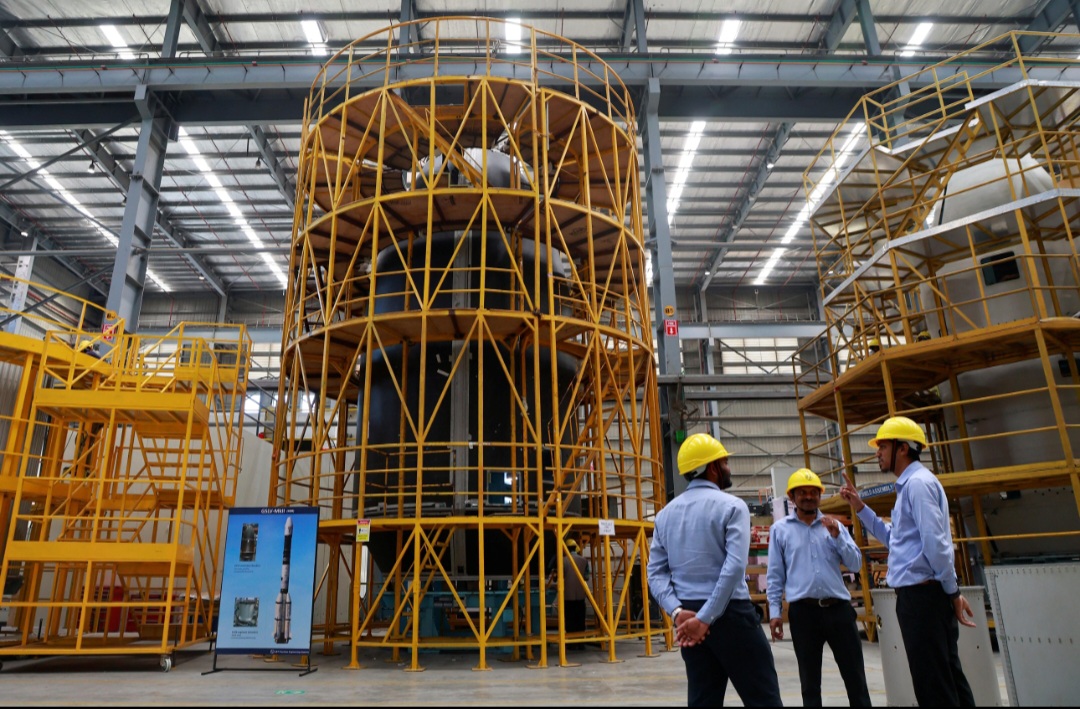
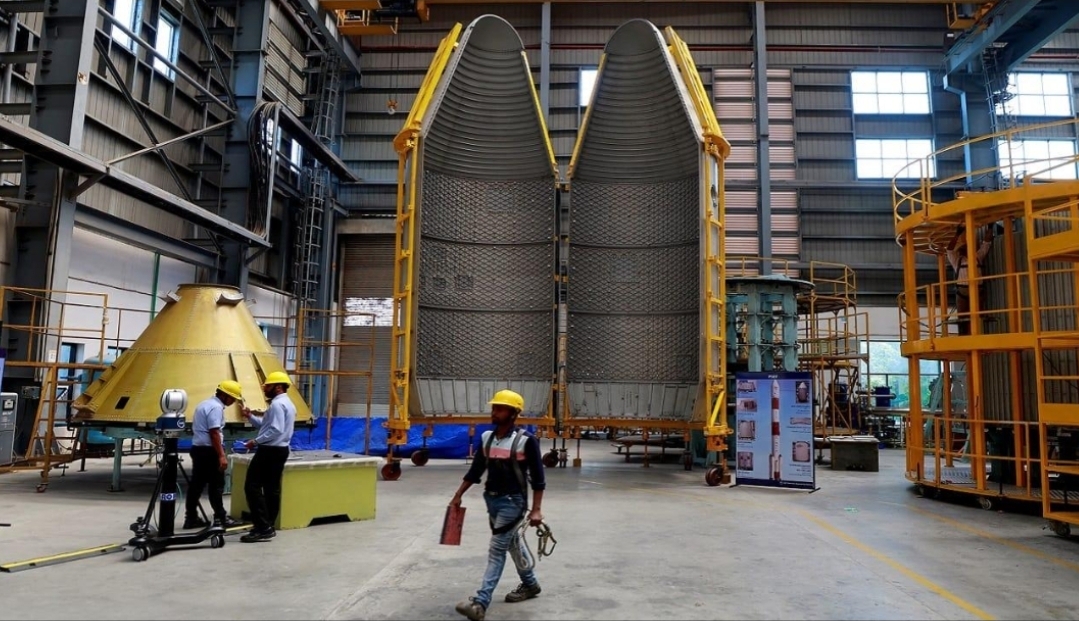
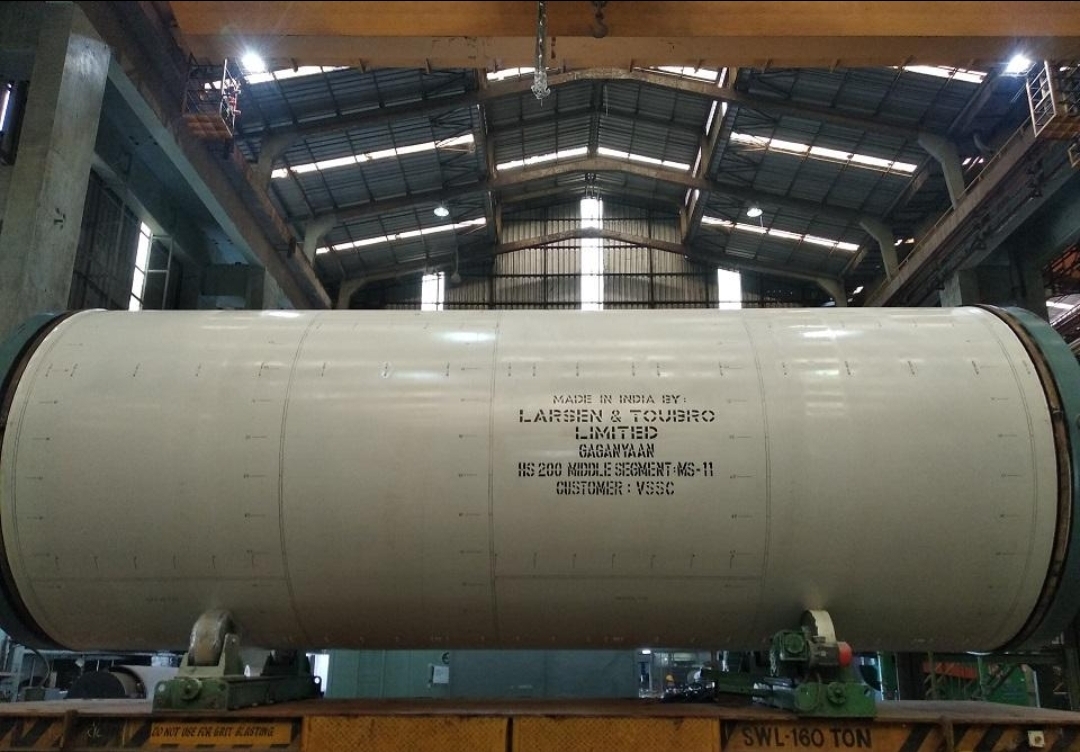
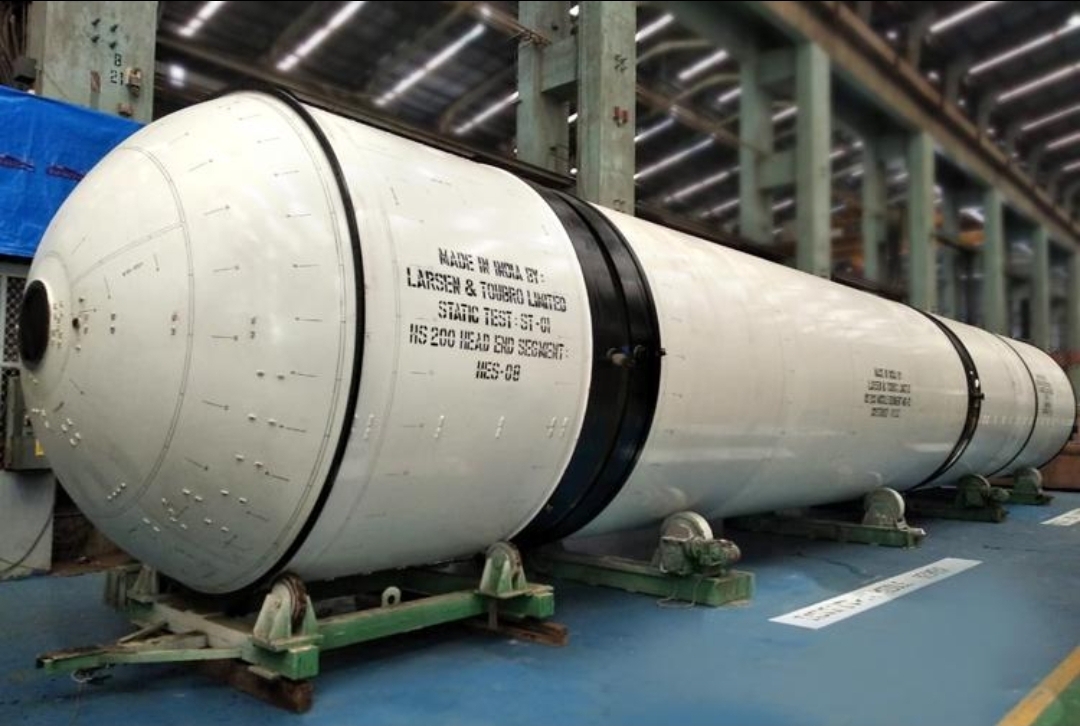
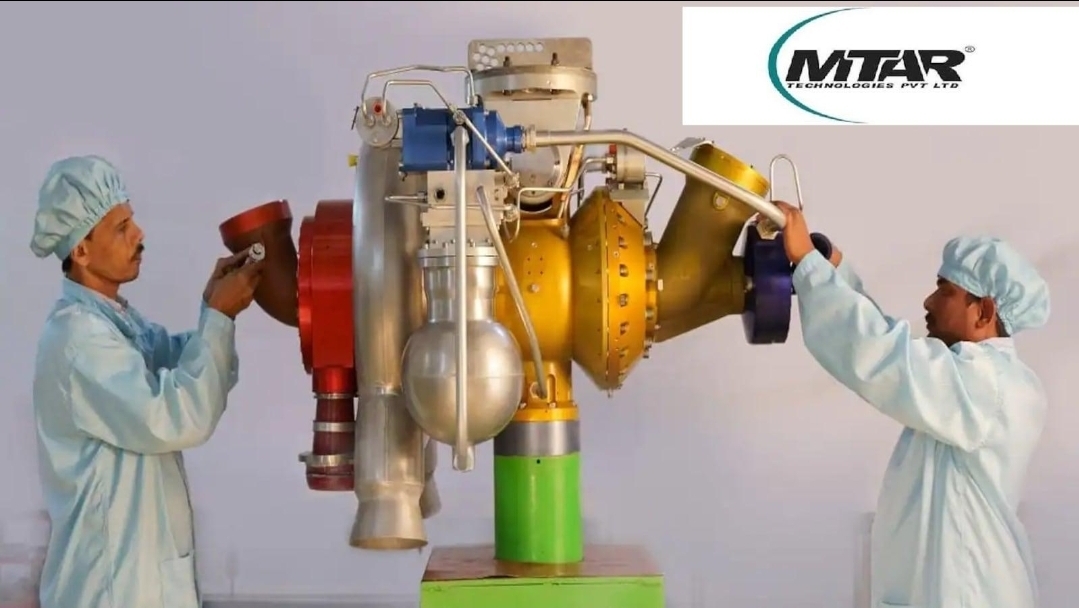
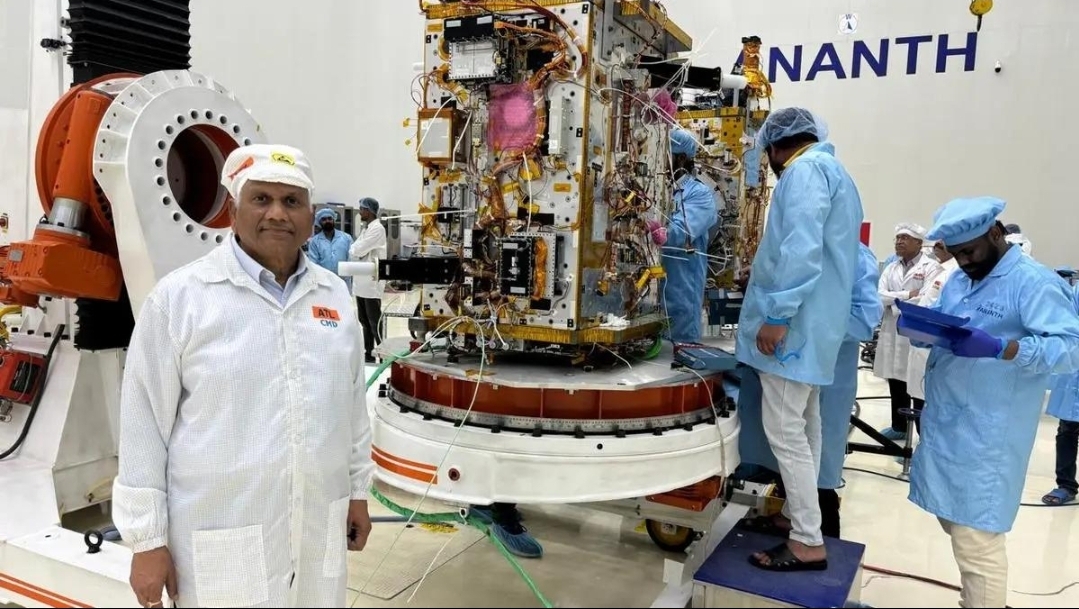
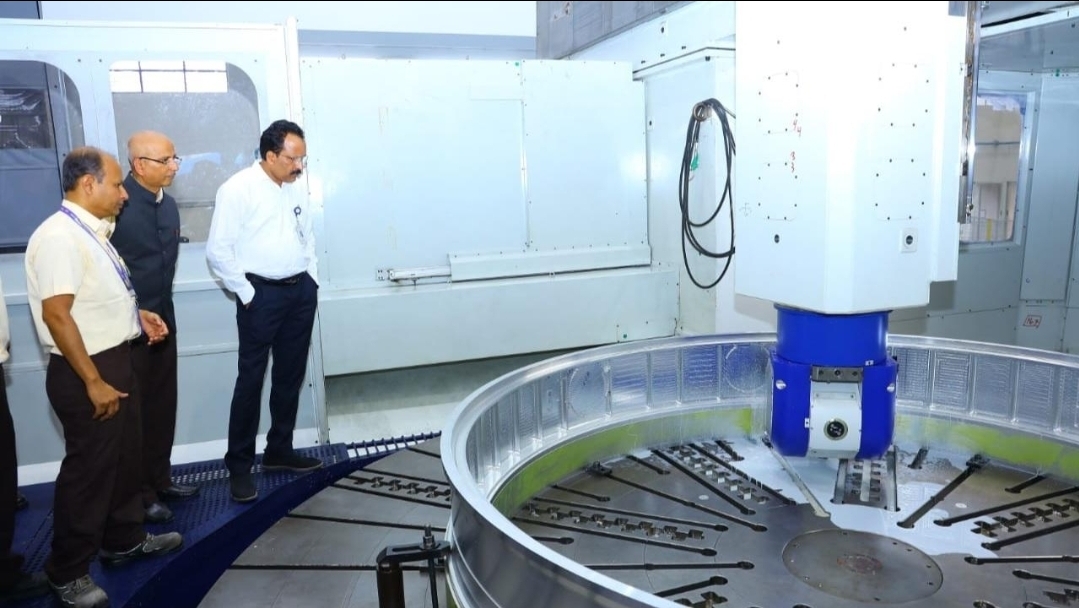

So the accurate historical picture isn't "ISRO built everything itself and private industry is a totally new intrusion"; it's that ISRO has always operated as something closer to a systems integrator and design authority, sourcing large portions of the actual manufacturing from private and quasi-private vendors, while retaining final assembly, testing, quality certification, and, crucially,overall design ownership and mission responsibility in-house.
ISRO must adopt the AMCA model for NGLV and beyond.
What the AMCA model actually is, precisely.
The Advanced Medium Combat Aircraft is India's indigenous fifth-generation stealth fighter. The critical design work, aerodynamics, stealth shaping, systems architecture, sits with the Aeronautical Development Agency (ADA), a design authority operating under DRDO. But in May 2025, the Ministry of Defence approved what's called the "Programme Execution Model," under which ADA doesn't manufacture the aircraft itself, nor does it default to HAL, India's traditional state-owned aircraft manufacturer. Instead, ADA opened competitive bidding to any qualified Indian firm, public or private,for building the prototypes and eventually running full-scale production. What actually happened next is the striking part: HAL, despite being India's largest defence company by revenue, was disqualified from the shortlist on financial-capacity criteria (its existing order book was too large relative to its turnover), leaving three private-led consortia, Tata Advanced Systems, an L&T–Bharat Electronics partnership, and a Bharat Forge–led group, to compete for the manufacturing contract.
So the essential structure is: the state retains the brain (design authority, technical requirements, certification standards), while the hand (fabrication, tooling, production-line execution) is opened to competitive industry, selected purely on capability rather than legacy ownership.
Why this maps onto NGLV cleanly.
The Next Generation Launch Vehicle is exactly the kind of program where this split makes sense, for the same reason it makes sense for AMCA: NGLV is meant to be India's new heavy-lift rocket, reportedly targeting roughly three times the payload capacity of the LVM3, and a program at that level of technical ambition and national strategic importance, human spaceflight-adjacent, deep-space mission-enabling, genuinely benefits from being led by people whose entire job is pushing the frontier of what's technically possible, not simultaneously running a production line. This proposal essentially says: let ISRO be to NGLV what ADA is to AMCA, design it, own the specification, hold the technical authority, and then, rather than mandating that a legacy public-sector entity build it by default, run the same kind of open competitive execution model that let Tata and L&T-led consortia beat out HAL on merit. This directly answers the manufacturing-scale problem we discussed earlier: instead of ISRO trying to retrofit its artisan culture into a production line (which we established it's structurally bad at), or handing production to a single incumbent PSU by default, you'd let genuinely capable private players, the same L&T and Godrej-caliber firms already experienced with rocket-grade components, bid to become full systems producers, the way TASL and the L&T consortium are doing for AMCA.
Conclusion
Pulling every thread of this conversation together, the picture that emerges isn't really "is privatising ISRO good or bad", it's a structural diagnosis of what a government science agency can and can't do well, and a genuine argument for redrawing the boundary of its responsibilities rather than expanding or shrinking them wholesale. ISRO's artisan-scale manufacturing, its layered bureaucratic decision-making, and its inability to compete on pay and autonomy against a private industry it itself helped birth are not separate problems, they're three symptoms of the same root cause: ISRO was built and is still governed as a public-accountability institution, and that structure, whatever its virtues for oversight and fiscal discipline, is fundamentally mismatched to the speed, risk tolerance, and capital-scaling that mass rocket production now demands.